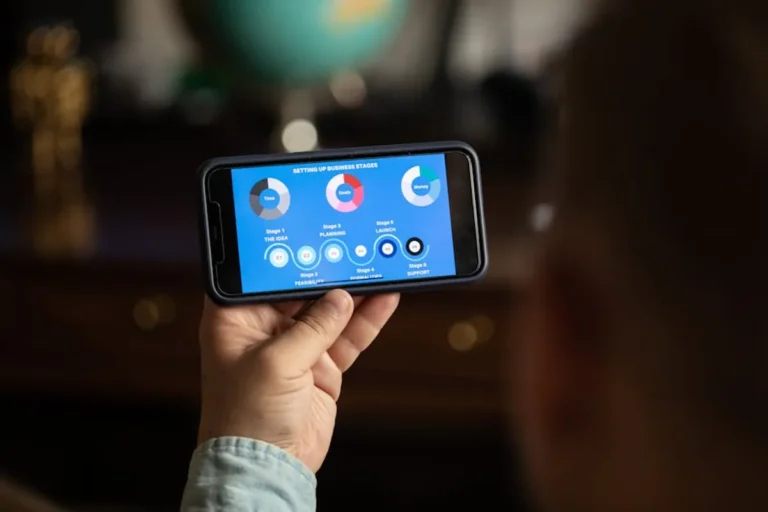

A dedicated landing page serves as a critical conversion tool for small businesses, distinct from a general website page. Unlike a homepage that offers broad navigation and information, a landing page is purpose-built for a singular objective: to convert a visitor into a lead, customer, or specific action-taker. This focus allows for highly targeted messaging and design, directly aligning with specific marketing campaigns such as paid ads, email promotions, or social media initiatives. The effectiveness of a small business landing page lies in its ability to eliminate distractions, present a clear value proposition, and guide the user towards a predefined next step, directly impacting campaign ROI and business growth. To effectively implement these strategies, consider the benefits of choosing the right website builder that offers specialized landing page features.
Defining Your Landing Page Objective and Audience
Before any design or copywriting begins, a small business must clearly articulate the primary goal of its landing page and identify its target audience. This foundational step dictates every subsequent decision, from the headline to the call-to-action.
Pinpointing Your Primary Goal
Every landing page must have one, unambiguous objective. This singular focus prevents user confusion and maximizes conversion potential. Common objectives include:
- Lead Generation: Capturing contact information via a form (e.g., for an ebook download, webinar registration, free consultation).
- Sales Conversion: Directing users to purchase a specific product or service.
- Event Registration: Encouraging sign-ups for an upcoming event, workshop, or demo.
- Content Download: Facilitating the download of a resource like a whitepaper, case study, or template.
- App Download: Driving installations for a mobile application.
Defining this goal early ensures all elements on the page work in concert towards that single outcome, streamlining the user journey.
Understanding Your Target Persona
Effective landing pages speak directly to the visitor's needs and pain points. Developing a clear understanding of the target persona involves more than just demographics; it requires insight into their motivations, challenges, and what they hope to achieve by interacting with your business. Consider:
- What problem are they trying to solve?
- What questions do they have?
- What objections might they have to your offer?
- What language and tone resonate with them?
This understanding informs the emotional and rational appeals used in the copy and the visual cues in the design, making the page feel personalized and relevant to the individual visitor.
Crafting Compelling Copy
Copy is the primary driver of conversion on a landing page. It must be concise, benefit-driven, and persuasive, guiding the visitor through a logical progression from interest to action.
The Headline: Hooking Attention Immediately
The headline is the first element a visitor sees and often determines whether they continue reading. It must be clear, benefit-oriented, and immediately convey value. A strong headline:
- Communicates the core offer or primary benefit directly.
- Uses specific language rather than vague statements.
- Aligns with the source of traffic (e.g., ad copy, email subject line) to maintain message match.
For example, instead of "Our New Software," use "Reduce Your Accounting Hours by 30% with [Software Name]."
Body Copy: Explaining Value and Addressing Objections
The body copy elaborates on the headline's promise, providing details that justify the offer and address potential concerns. This section should:
- Focus on benefits over features, explaining how the offer solves the visitor's problem or improves their situation.
- Incorporate social proof, such as testimonials, case studies, or trust badges, to build credibility.
- Use clear, scannable paragraphs, bullet points, and subheadings to break up text and improve readability.
- Anticipate and address common objections or questions a visitor might have before taking action.
Pro Tip: Implement A/B testing for your headlines and calls-to-action. Even minor changes in wording can significantly impact conversion rates. Test one element at a time to isolate the variables and identify what resonates most effectively with your target audience. For instance, compare a benefit-driven headline against a problem-solution headline, or a direct CTA against a value-oriented one.
Call to Action (CTA): Guiding the Next Step
The Call to Action is the most critical element for conversion. It must be prominent, clear, and action-oriented. An effective CTA:
- Uses strong, specific verbs (e.g., "Download Now," "Get Your Free Quote," "Register for the Webinar").
- Is visually distinct from other page elements, often with contrasting colors.
- Communicates the immediate value or outcome of clicking (e.g., "Start Your Free Trial" implies access, "Submit" does not).
- Is placed strategically, typically above the fold and repeated at logical points further down the page.
Designing for Conversion
The visual design of a landing page significantly influences user experience and, consequently, conversion rates. Design elements should support the copy, reduce friction, and guide the user toward the CTA.
Layout and Visual Hierarchy: Directing the Eye
A well-structured layout directs the visitor's attention to the most important elements. Key considerations include:
- Above the Fold: The most crucial information (headline, primary benefit, CTA) should be visible without scrolling.
- F-Pattern or Z-Pattern: These common reading patterns can inform element placement, guiding the eye through the page.
- Whitespace: Ample whitespace improves readability and reduces visual clutter, allowing key elements to stand out.
- Contrast: Use contrasting colors for the CTA button against the background and surrounding elements to ensure it's easily spotted.
Visual Elements: Supporting the Message
Images, videos, and graphics should enhance the message, not distract from it. They must be high-quality, relevant, and align with your brand identity. Consider:
- Hero images or videos that depict the benefit of your offer or show your product in use.
- Infographics that simplify complex information.
- Trust signals like security badges, privacy policy links, or logos of reputable partners.
- Consistent branding (colors, fonts) across the landing page and your overall marketing materials.
Form Optimization: Reducing Friction
If your landing page objective involves a form, its design directly impacts conversion. To minimize abandonment:
- Request only the essential information. Every additional field reduces completion rates.
- Use clear, concise labels for each field.
- Implement inline validation to provide immediate feedback on input errors.
- Ensure the form is mobile-friendly and easy to complete on smaller screens.
- Make the submit button prominent and reassuring (e.g., "Get My Free Ebook" instead of "Submit").
Technical and Performance Considerations
Beyond content and design, the technical foundation of your landing page is crucial for user experience and search engine visibility. A slow or inaccessible page undermines even the best messaging.
Page Speed: Retaining Visitor Attention
Slow loading times are a primary cause of high bounce rates. Visitors expect pages to load quickly, especially on mobile devices. To optimize page speed:
- Compress images without sacrificing quality.
- Minimize HTTP requests by combining files and reducing external scripts.
- Leverage browser caching for returning visitors.
- Use a reliable hosting provider with fast server response times.
Mobile Responsiveness: Reaching All Users
A significant portion of web traffic originates from mobile devices. Your landing page must render perfectly across all screen sizes and orientations. This means:
- Using a responsive design framework that adjusts layouts automatically.
- Ensuring touch targets (buttons, links) are large enough to be easily tapped.
- Prioritizing content for mobile users, potentially simplifying layouts for smaller screens.
- Testing the page on various devices and browsers to confirm functionality and appearance.
Tracking and Analytics Setup: Measuring Success
To understand what's working and what isn't, robust tracking is essential. Integrate analytics tools to monitor key performance indicators (KPIs):
- Conversion Rate: The percentage of visitors who complete your desired action.
- Bounce Rate: The percentage of visitors who leave after viewing only one page.
- Time on Page: How long visitors spend engaging with your content.
- Traffic Sources: Identifying where your visitors are coming from.
Tools that offer heatmaps and session recordings can provide deeper insights into user behavior, highlighting areas of friction or confusion.
Launching and Iterating Your Landing Page
Creating a landing page is not a one-time task; it's an ongoing process of optimization. After launching, continuously monitor its performance using the analytics tools you've set up. Conduct A/B tests on different headlines, CTAs, images, or even entire page layouts to identify elements that improve conversion rates. Gather user feedback where possible, and be prepared to make data-driven adjustments. The goal is continuous improvement, refining the page over time to maximize its effectiveness in achieving your small business objectives.
Frequently Asked Questions
What is the core difference between a landing page and a homepage?
A landing page has a single, focused goal to convert visitors for a specific campaign, offering minimal navigation to reduce distractions. A homepage serves as a central hub for a website, providing broad information and navigation options to explore various aspects of the business.
How long should a small business landing page be?
The ideal length depends on the complexity of your offer and the amount of information required to convince the visitor. Simple offers (e.g., email signup) can be short, while complex offers (e.g., high-value software demo) may require longer pages with more detail and social proof. Focus on providing enough information to address objections without overwhelming the user.
Do I need a separate landing page for every marketing campaign?
Yes, ideally. Creating a unique landing page for each distinct marketing campaign (e.g., Google Ads, Facebook Ads, email promotion) allows for precise message match, tailored content, and accurate tracking of campaign-specific performance, which leads to higher conversion rates.
What are the most important metrics to track for landing page performance?
The most crucial metrics are conversion rate (the percentage of visitors who complete the desired action), bounce rate (visitors who leave after viewing only the landing page), and traffic sources. Monitoring these provides direct insights into the page's effectiveness and where to focus optimization efforts.